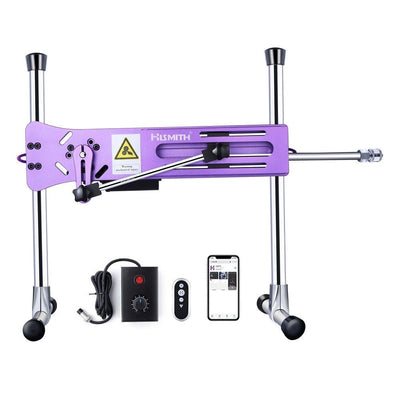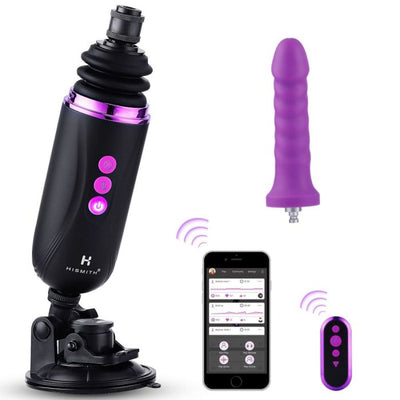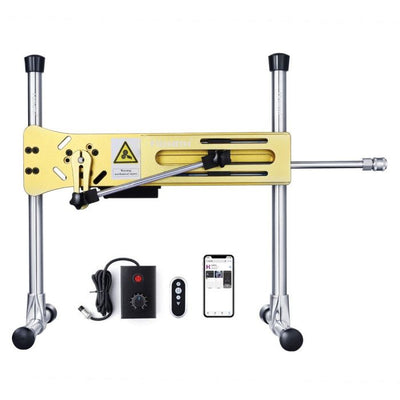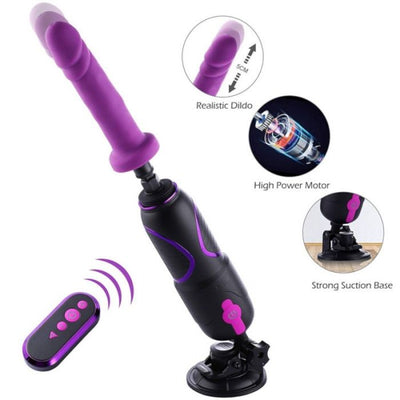
The quick version
- Sex machine troubleshooting starts at the power chain, not the motor. Work from the wall socket inwards before you assume the expensive thing.
- Unplug at the wall before you touch a fastener, because a mains machine that starts under your hands is the one real hazard here.
- A machine set to its longest stroke cannot also run at its fastest rate. That is the mechanism, not a failure.
- Thrust that feels weak is usually a heavy attachment, a long stroke, or not enough lube.
- New knocking is almost always a loose fastener or a dry slide rod.
- A fault you cannot clear in twenty minutes is a warranty conversation, not a repair project.
Where Should You Start With Sex Machine Troubleshooting?

At the wall socket, then inwards one link at a time. A floor-standing machine is a chain of five parts, and naming them is most of the diagnosis. The power supply converts mains voltage. A junction box carries it into the unit. The speed controller sets the pace. The swing arm and slide rod turn rotation into a stroke. The mount holds the attachment.
Faults cluster at the two ends of that chain, the power side and the attachment side. The motor in the middle is the least likely culprit and the most expensive thing to assume. Test in order and you will usually have it inside a few minutes.
What If It Will Not Power On At All?
Treat the cord and the controller as suspects before you blame the machine. The indicator light does most of the work for you.
Power the machine on with the speed controller disconnected and watch the blue indicator. If it flashes, pull the power cord out of the machine and watch again. A light that keeps flashing points at the cord. A light that settles points further in, at the connection between the junction box and the motor. That sequence comes from HiSmith's troubleshooting guide.
If the red light on the speed controller will not come on, rule the controller out first. On an app or remote model you have a second way in: a machine that answers the handset but ignores the wired controller has told you where the fault is.
Check the dull stuff alongside it. The supply plugs into the machine as well as the wall, and the machine end works loose far more often: the same first move as a dead kettle, and right about as often. Voltage itself is rarely the culprit: the Cannon is listed at 100 to 240V, 2.5A, with an Australian certified supply. How mains power works on these machines covers the rest.
Why Has the Remote or App Stopped Responding?
Distance, pairing and batteries, in that order. The hardware is almost never the issue.
- Range: the Cannon's remote is rated beyond 10 metres, so a handset dropping out inside one room is a pairing or battery fault.
- Batteries: a handset on a fading battery loses range before it loses function, which reads exactly like a machine problem.
- Pairing: close the app fully, leave the machine powered, and pair from scratch rather than nursing a half-connected session along.
- One controller at a time: a machine still taking orders from the wired controller will ignore the app, and it looks like a dead app.
- The app itself: HiSmith resolves app faults through support inside the app, once the hardware has clearly passed.
Why Does the Thrust Feel Weak or Uneven?
Load, stroke length or lube. Motor power is last on that list, not first.
Attachments have a weight ceiling, and it is lower than people expect. The Servok Premium is rated to roughly 2.6 kg. A toy near that limit is the most common reason a machine that felt fine last month now feels laboured. Fit something lighter and see whether the complaint goes with it.
Stroke length is the other half. At its shortest stroke the Servok reaches 600 strokes a minute; at its longest, 120. Same machine, same motor, five times the rate. If you have set a long stroke and you are waiting for speed to arrive, nothing is broken: you have asked for the two things that trade against each other. Thrust depth and stroke length pulls that apart properly.
Then lube, which hides in plain sight. Friction on the rod and the attachment reads as hesitation in the stroke. Water-based goes with silicone attachments, because silicone lube breaks silicone down and a tacky, swollen toy drags in the mount. The lube range is the cheapest fix on this page.
And depth is not a setting. Depth is where the machine sits. Shift it a centimetre or two, or put a pillow under your hips, before you reach for a dial.
Which Problems Are Not Faults At All?
Several of the most reported ones. Here is what is actually happening.
What Can You Safely Check Yourself?
Everything outside the housing. Nothing inside it.
- Unplug at the wall first, every time: a mains machine that can start while your fingers are near the rod is the one genuine danger here.
- Housing stays closed: the motor and junction box live behind it, so opening it puts you beside mains wiring and ends the warranty in one move.
- Water nowhere near the base: a barely damp cloth and nothing wetter, because the electronics are not sealed and no machine here is waterproof.
- Use the wrench it came with: the Premium (Original) ships with a hexagon wrench for this job, and the right size stops you rounding a fastener off.
- Stop on a burning smell or a damaged cord: unplug, set it aside, and treat it as a replacement, not a repair.
Attachment hygiene belongs in the same breath. Warm water and mild soap, a full air dry before storage, and a fresh condom or a proper wash between anal and vaginal use, because gut bacteria travelling the wrong way is the reason.
When Does This Become a Warranty Claim?
The moment the fault sits inside the housing or in the power supply. Those are not owner-serviceable parts.
A failed cord, controller or supply is a straightforward replacement conversation. Every machine carries a one-year warranty, with your Australian Consumer Law rights on top, and a major failure in a four-figure purchase is not a twelve-month problem. Your rights on a machine purchase spells out how the two sit together.
Before you get in touch, write down what you saw: which lights did what, whether the handset answered, whether the fault followed the cord. Ten minutes of notes takes days out of the back and forth. If you would rather talk it through, sales@pleasingstrings.com.au reaches someone who knows the range, and the machine range is there if a replacement is the answer.
Frequently Asked Questions
Can I open the machine up and fix it myself?
Not on a mains-powered unit. The motor and junction box sit behind the housing, so opening it puts you next to live wiring and voids the warranty. External parts are fair game: cords, controller, fasteners, mount. The setup guide shows which fasteners are meant to come undone.
Why is my machine slower on long strokes?
Because the rod has further to travel each pass. The Servok Premium runs 600 strokes a minute at its shortest setting and 120 at its longest. Pair short with fast, or long with slow. The settings walkthrough covers working the two together.
Does a warm motor mean the machine is on its way out?
Not by itself. Warmth after sustained use is normal for a mains motor. Heat alongside a smell, a change in pitch, or the machine cutting out is different: that is a stop-and-unplug, not a cool-down.
Can I use silicone lube on the attachment?
Not with a silicone attachment. Silicone lube degrades silicone, and a softened, tacky toy drags in the mount and reads as a motor problem. Water-based with silicone, every time. Water-based against silicone sets out when each belongs.
Why Buy From Pleasing Strings


Machines ship by standard Australia Post in plain, unbranded packaging with a discreet billing descriptor, usually arriving in 1 to 4 business days. Shipping is free over $109. Each machine carries a one-year warranty with your Australian Consumer Law rights on top, and sales@pleasingstrings.com.au reaches someone who can talk a fault through before you pack anything up.
Related guides
- Setting up your machine, step by step
- Why it got noisy, and how to fix it
- How to stop a machine sliding and tipping
Last updated: 6 October 2026